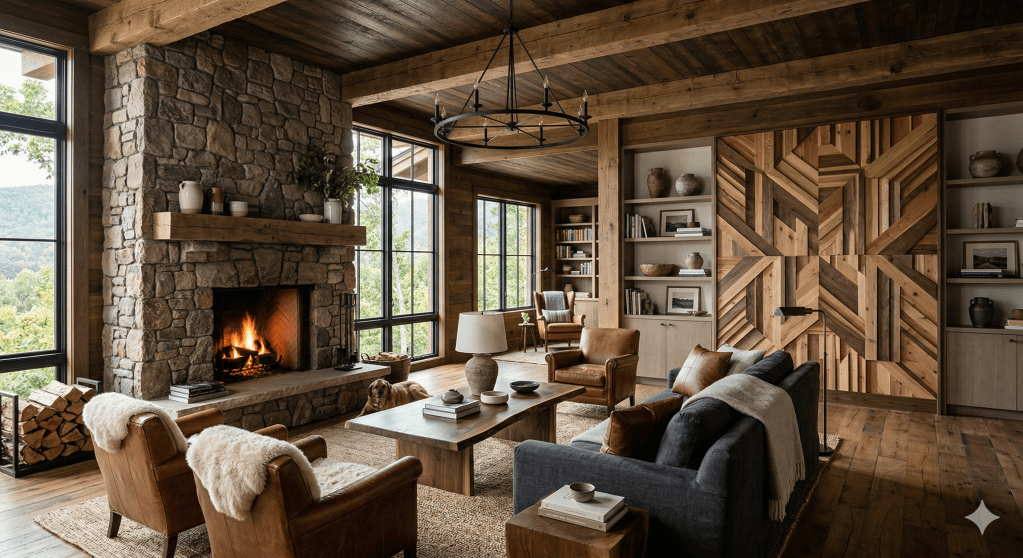
Mountain-inspired interiors have become one of the most searched home decor aesthetics — and one of the most frequently misexecuted. The difference between a mountain-themed living room that feels genuinely elevated and one that tips into kitsch is narrower than most people think, and it comes down to a few specific decisions.
The rooms that work — the ones you see in shelter magazines, in Architectural Digest features on mountain retreats, in the interiors of well-designed ski chalets — share a set of qualities: warmth without heaviness, organic materials without rustic cliché, and an art sensibility that references the landscape without depicting it literally.
Here’s the framework.
What Mountain Interiors Get Wrong
The most common mistake in mountain-themed rooms is literalness. Antler chandeliers. Bear figurines. Throw pillows printed with pine trees. These choices announce the theme loudly without contributing anything to the room’s actual quality. The result feels like a reference to a cabin rather than a cabin.
The rooms that succeed communicate the mountain aesthetic through materials, palette, and dimensional art rather than printed motifs. The feeling of warmth, groundedness, and connection to the natural world — the qualities that make mountain interiors compelling — comes from how the room is built, not from what’s depicted on it.
The Palette
Warm neutrals are the foundation: cream, warm ivory, camel, and oatmeal for the soft surfaces; walnut, oak, and weathered wood for the hard ones. Add deep, grounding colors as accents — forest green, deep burgundy, warm brown, slate. The palette should feel like the landscape: organic, layered, warm in tone rather than stark or cold.
Avoid: Bright blue “sky” accents, white-and-gray Scandi minimalism (it reads cold in mountain contexts), matching furniture sets in any material.
The Materials
Natural materials do the heavy lifting in mountain interiors. Solid wood — in warm tones rather than pale Scandinavian finishes — is the most important surface decision. Wool, linen, and bouclé for textiles. Leather in warm brown or caramel as an accent. Stone or concrete where architectural conditions allow.
The layering principle applies: a mountain living room should feel accumulated rather than purchased. Vintage pieces, handmade objects, and materials that have developed patina sit together in a way that new, matched furniture can’t replicate.
The Art
This is where mountain interiors most consistently fall short. The typical solution — a canvas landscape print, a framed ski poster, photography of mountain ranges — communicates the right subject matter with flat execution.
Dimensional metal wall art is the most effective alternative. Anthem Classic‘s hand-welded steel pieces specifically were designed for this application: mountain landscapes, rendered in solid 14-gauge American steel with a warm patina, made to order in the Ozarks. The result is art that doesn’t just depict the landscape — it has the weight and presence of something that belongs in a serious room.
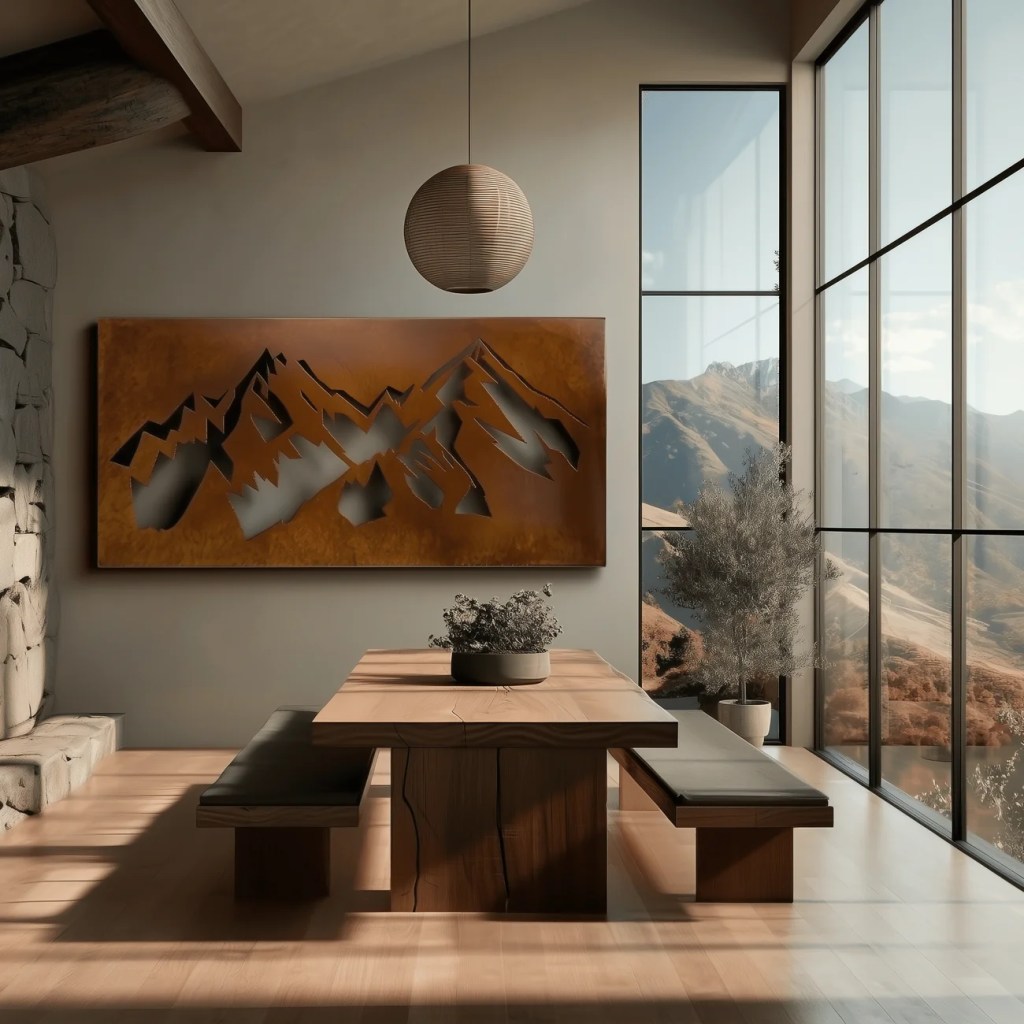
THE GRAND TETON (from $615)
The wide, layered mountain range composition is the most versatile option for living rooms. The horizontal format suits the wall above a sofa, above a fireplace mantle, or on a wide entry wall. The patinated steel reads warm and dimensional under any light.
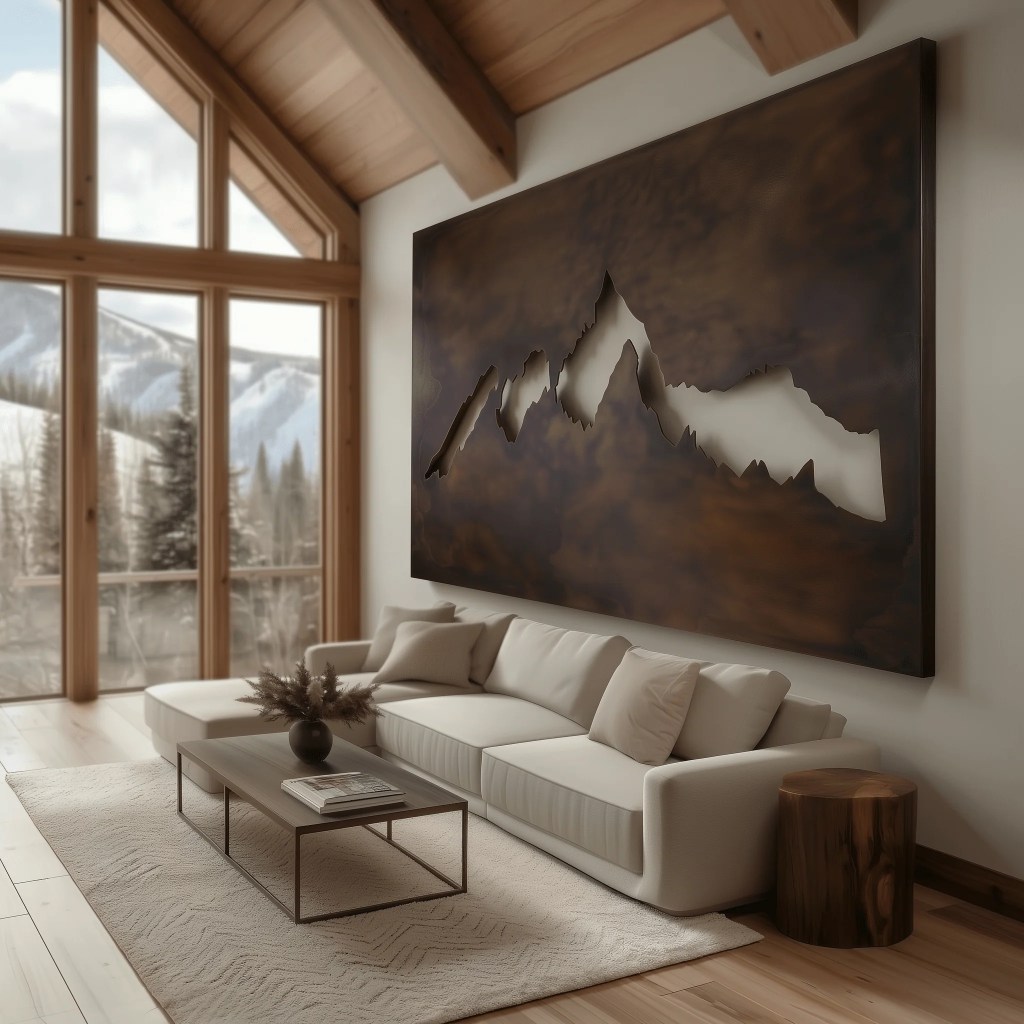
THE CRESTFALL (from $635)
More tension and drama — a jagged ridgeline with sharper angles and a more vertical sense of altitude. Works in rooms with darker walls and more maximalist layering. One reviewer described it as “massive in size and presence — it immediately became the focal point of the room.”
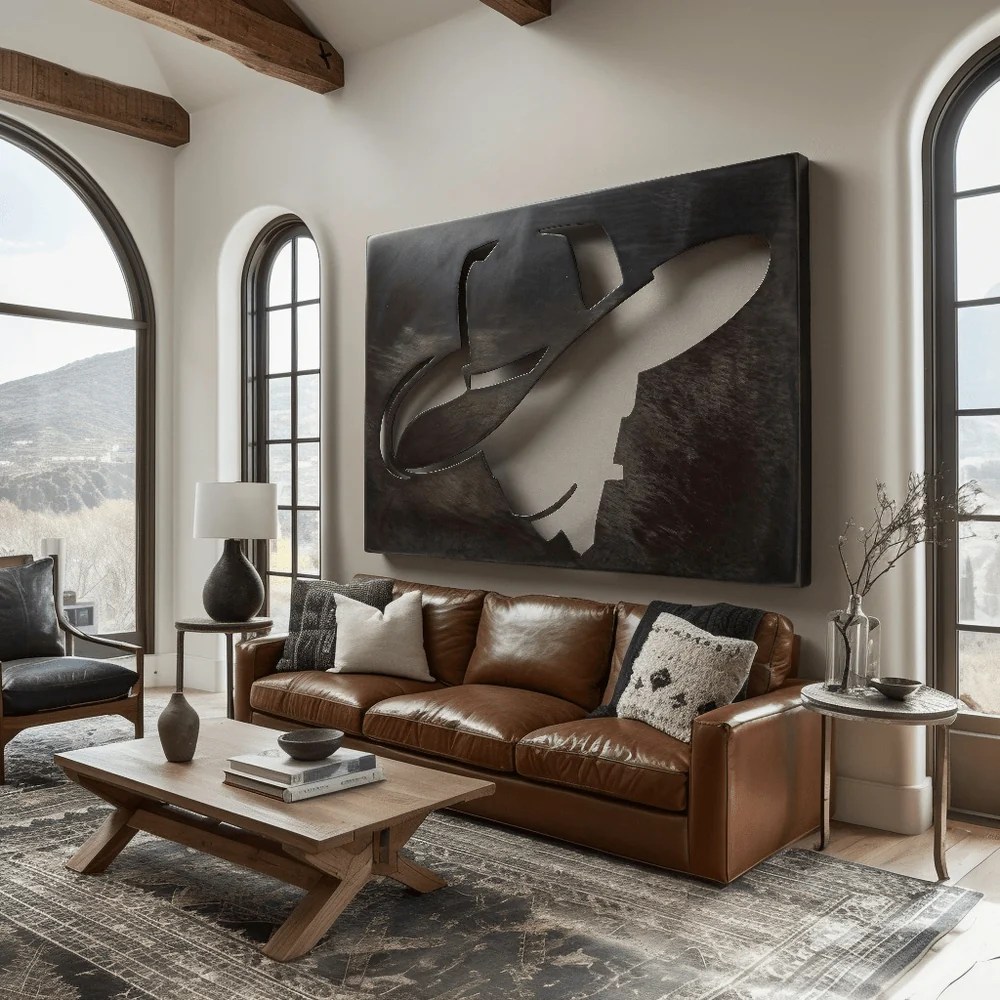
THE WRANGLER (from $635)
A more Western-influenced piece in the collection — suited to mountain rooms with a ranch or high-desert adjacency rather than a pure alpine sensibility.
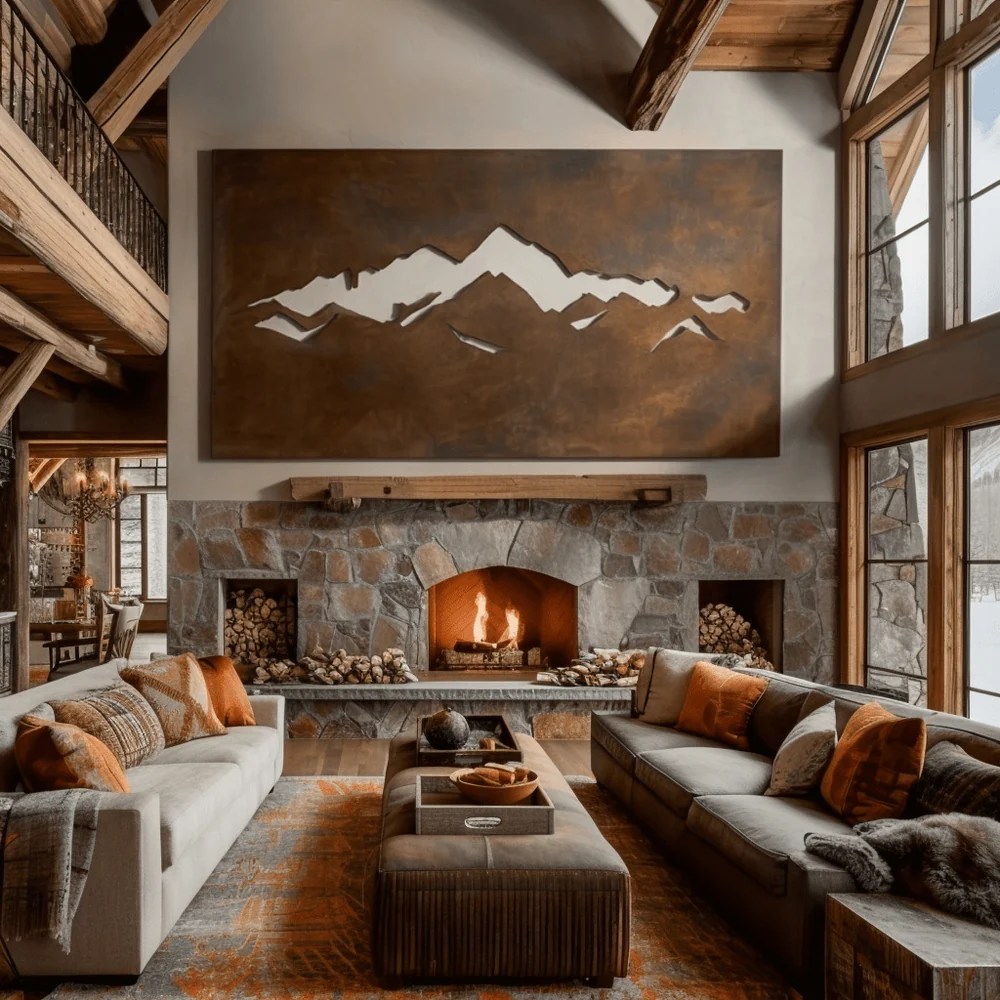
THE WESTERN ASCENT
A wider, more expansive composition for rooms with significant horizontal wall space.
The Wallpaper Decision
For mountain living rooms where the walls need more texture and warmth than paint can provide, botanical and organic wallpapers in warm neutral grounds work well as a backdrop.
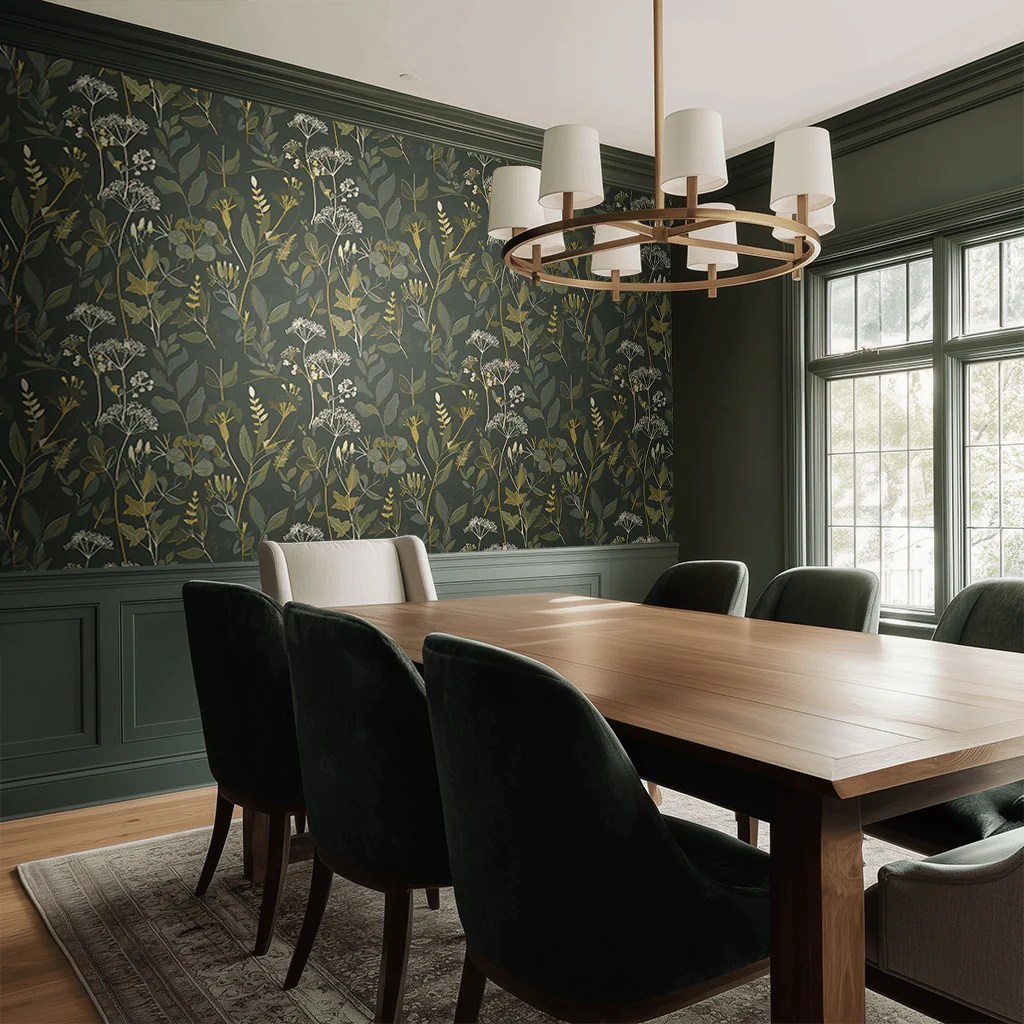
Painted Paper’s Mattie Wallpaper — organic botanical shapes on a warm ground — creates exactly the kind of nature-immersive quality that mountain interiors seek. Lemon Park’s Alta, with its wintry mountain landscape pattern, is more narrative and directly references the alpine aesthetic for rooms that want to lean into that quality.
The Finishing Layers
Lighting: warm, low, layered. Floor lamps rather than overhead, table lamps on side tables, candles where possible. Mountain interiors should feel like firelight.
Textiles: layer aggressively. Wool throws, sheepskin, chunky knit blankets, a high-pile area rug in a warm neutral. The tactile richness is inseparable from the aesthetic.
Plants: one or two substantial plants — a fiddle leaf fig, an olive tree, a large monstera — rather than a collection of small ones.
Books and objects: the collected quality of a mountain room depends on visible history. Books stacked horizontally as well as vertically. A basket with extra wood or extra throws. Objects with visible craft.
 Pattrn
Leave a comment