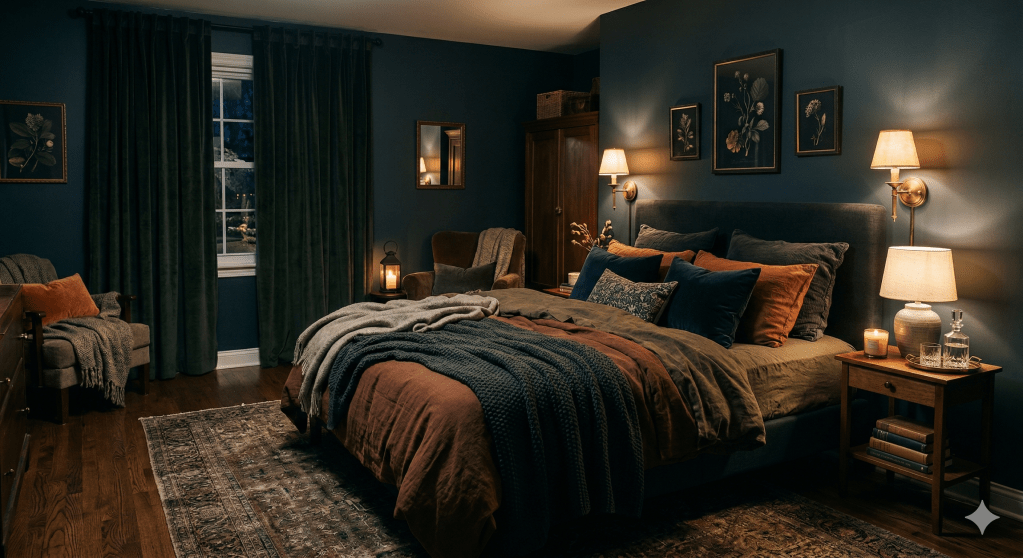
The dark moody bedroom has become one of the most coveted aesthetics in residential design — and one of the most feared. People want the atmosphere: the depth, the warmth, the sense of stepping into somewhere enveloping and deliberate. What they worry about is the reality: a room that feels oppressive, closed-in, or simply too dark to function.
The fear is understandable and mostly unfounded. Done correctly, a dark bedroom doesn’t lose light — it transforms it. Here’s how.
Why Dark Works in Bedrooms Specifically
The bedroom is the one room where darkness is a legitimate functional goal. You sleep in it. The absence of light is not a failure condition — it’s the point.
Beyond function, dark walls in a bedroom create something that light walls can’t: the sense of enclosure that makes rest feel genuine. A bedroom with deep walls wraps around you. It signals that you’ve arrived somewhere separate from the rest of your life. Designers describe moody darker interiors as acting as a refuge from everyday overstimulation — spaces that feel like a retreat when paired with warm lighting and natural textures.
The critical condition: warmth. A dark bedroom done in cool tones — gray-black, blue-black, cold navy — can feel cold and heavy. A dark bedroom done in warm tones — deep forest green, chocolate brown, warm burgundy, dusty slate — feels enveloping rather than oppressive. The temperature of the dark matters as much as the darkness itself.
Choosing the Right Dark Color
Deep forest or bottle green is the most forgiving dark color for bedrooms. It reads warm and organic rather than stark, responds beautifully to both natural and artificial light, and pairs naturally with wood, brass, and linen — the materials that warm a dark room best.
Rich burgundy or wine creates the most dramatic effect but requires the most careful execution. It’s warm and enveloping at its best, potentially overwhelming at its worst. Works best in larger bedrooms with good natural light.
Chocolate or espresso brown is the most underused option and frequently the most beautiful. It reads as warm from the first moment and feels genuinely cozy rather than theatrical. The 2026 color direction — Benjamin Moore’s Silhouette, a rich espresso brown, as Color of the Year — confirms this.
Deep, dusty navy or slate works in bedrooms that receive morning light and want a more restrained version of the moody effect. The key is choosing a navy with warm rather than cool undertones.
What to avoid: pure black (removes warmth entirely), cool charcoal (cold and flat), blue-grays without warm undertones (feel clinical rather than atmospheric).
Wallpaper as an Alternative to Paint
For bedrooms where dark paint feels like too large a commitment, dark-ground wallpaper provides the same depth and atmosphere with more complexity and visual interest — and in peel-and-stick formats, considerably less permanence.
The advantage of dark botanical wallpaper over dark paint is that the pattern does additional work: it creates movement and detail that a flat dark wall can’t, and the botanical subject matter adds organic warmth that pure color doesn’t.
Painted Paper’s Odette Arboretum — a metallic woodland botanical in black, dark bronze, and gold — is one of the most effective options for the moody bedroom treatment. Under warm lamplight the metallic elements in the pattern come alive in a way that rewards looking from close range, which is exactly the condition of a bedroom.
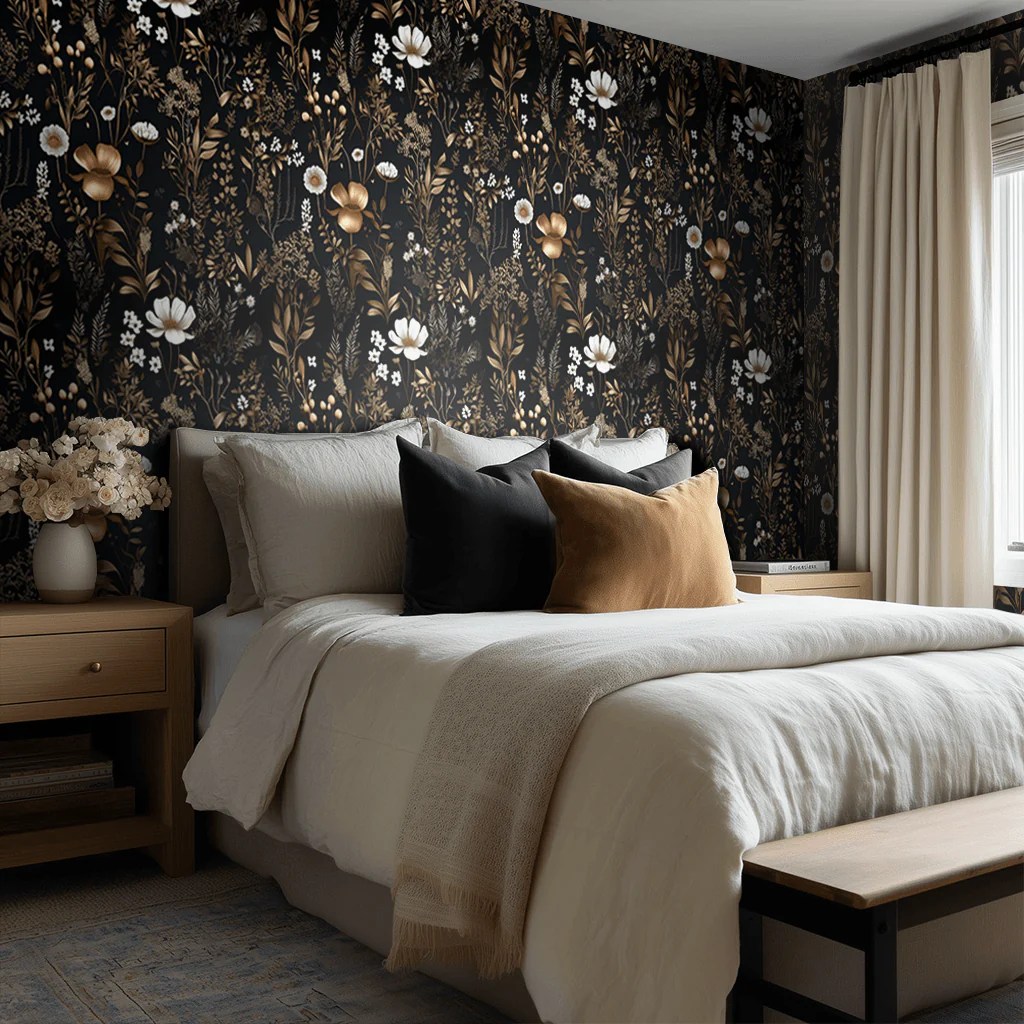
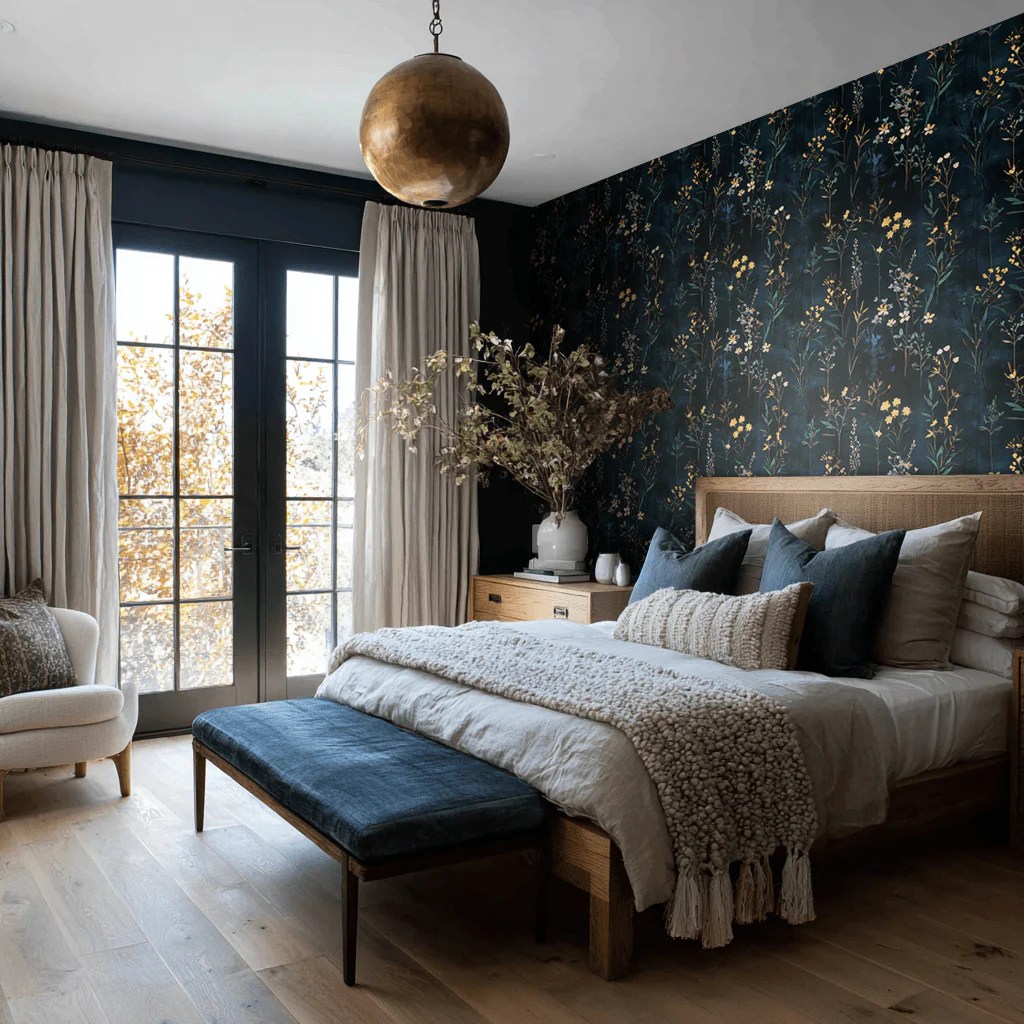
For a warmer, slightly less stark version: Lillia Wallpaper brings the same depth with an underlying warmth that suits bedrooms that want atmosphere without coldness.
Lighting: The Non-Negotiable
This is where dark bedrooms most commonly fail. A single overhead fixture in a dark room creates a harsh, flat light that makes the walls feel heavy rather than atmospheric. Overhead lighting in a dark bedroom should be used only for task purposes — getting dressed, cleaning — and almost never in the evening.
The lighting that makes a dark bedroom work: multiple sources at low heights, all warm-toned, all dimmable or switchable independently.
Bedside lamps with warm-toned bulbs (2700K maximum) are essential. A floor lamp in a corner adds warmth without overhead harshness. Candles — real ones, used regularly — add the flickering quality that makes dark rooms feel alive rather than static.
The rule: in a dark bedroom, you should never be sitting in the room in the evening with overhead lighting on. The lamps do the work. The overhead fixture is for daytime tasks only.
Textiles: Keep Them Warm and Layered
Dark walls require equally warm textiles to prevent the room from reading as cold. Cream and ivory linen, camel and warm tan wool, soft terracotta accents. The bedding should be warm in tone — not white-white, not cool gray — because cool textiles against dark walls create a contrast that reads as cold rather than sophisticated.
Layering matters more in dark bedrooms than in light ones. The visual warmth created by multiple textures — linen, velvet, wool, woven cotton — compensates for the light the walls are absorbing.
The Ceiling Question
The default move is to leave the ceiling light while darkening the walls. This creates a visual interruption — the eye notices the shift from dark wall to light ceiling, which can make the room feel lower rather than more enveloping.
The most dramatic and most resolved option: drench the ceiling in the same dark tone as the walls, or use the same dark wallpaper on all five surfaces. The room becomes a complete environment rather than a dark-walled box with a white lid.
For those not ready to commit to ceiling drenching: paint the ceiling one or two shades lighter than the walls in the same color family. Deep forest green on the walls, soft sage on the ceiling — the connection reads and the ceiling doesn’t feel disconnected.
What Makes It Work
A dark moody bedroom that succeeds has three qualities: warmth in the color, layering in the light, and enough textile texture to absorb and redistribute the warmth rather than letting it disappear into the walls.
Get those three things right and the dark bedroom stops feeling like a design risk and starts feeling like the room you most want to be in. Which is, after all, the point of a bedroom.
 Pattrn
Leave a comment