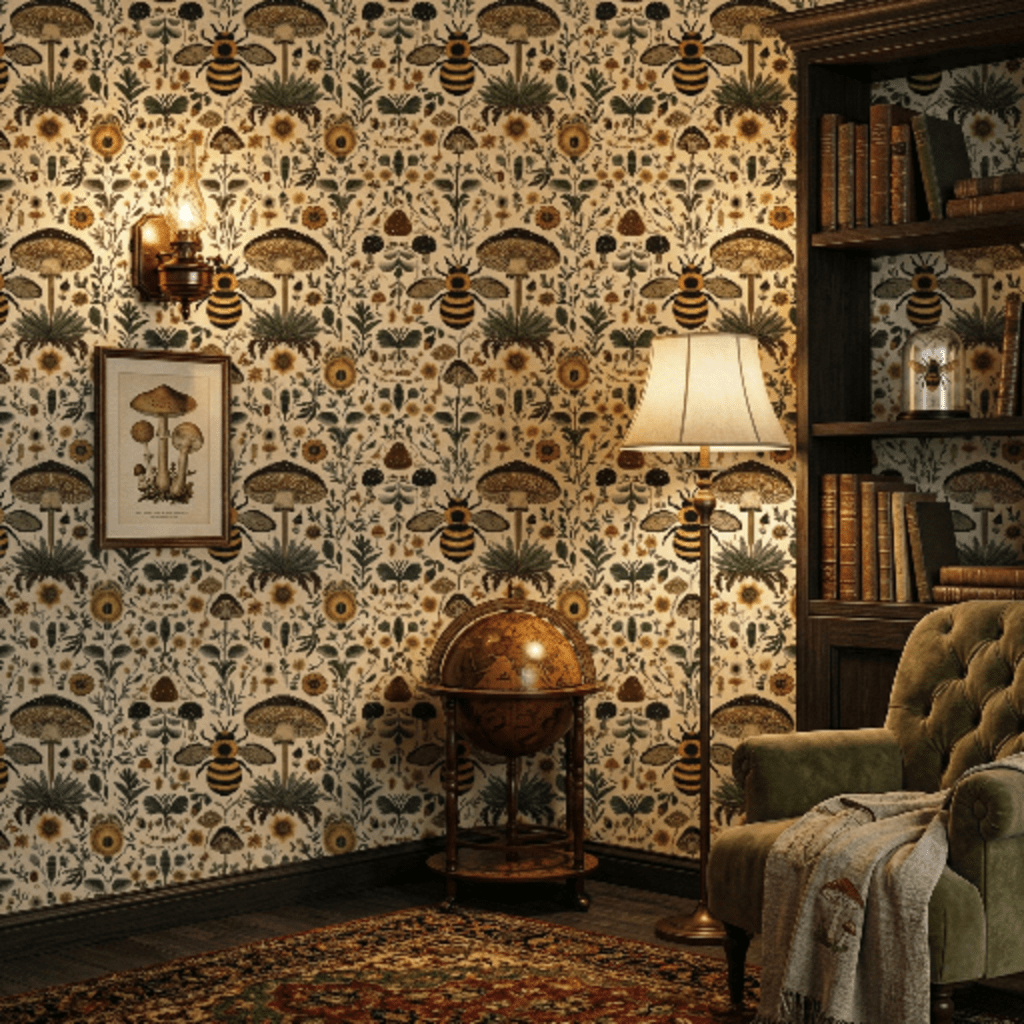
The grandmillennial aesthetic arrived as a correction. After years of bedrooms stripped to their least interesting elements — white walls, matching nightstands, a single abstract print above the bed — people started looking at their grandmother’s house and noticing it had something their carefully curated apartment didn’t: soul.
The term is inexact but the feeling is precise. Grandmillennial interiors are warm, pattern-forward, slightly cluttered in a deliberate way, full of things that have history. Florals that don’t apologize. Embroidered pillows. Cane furniture. Lamps that feel like they’ve been somewhere. Wallpaper as a foundational choice rather than an afterthought.
The risk — and it’s a real one — is that executing this aesthetic without editing produces a room that looks like a set rather than a home. Here’s how to avoid that.
What Defines a Grandmillennial Bedroom
The grandmillennial bedroom is built on three qualities that genuinely set it apart from other maximalist aesthetics:
Pattern confidence. Not one pattern, not a cautious floral on a single cushion. Multiple patterns in conversation with each other — typically a dominant wallpaper or textile, a secondary pattern on the bedding, and an accent pattern in the rug or curtains. The patterns share a palette but don’t match.
Collected objects. Vintage frames, ceramic lamps with interesting bases, small botanical prints, a tray of perfume bottles, a stack of books with beautiful spines. Nothing is there to fill space. Everything has been chosen, found, or inherited.
Warm materiality. Linen that’s soft from use. Embroidered details. Cane and rattan. Brass that’s developing patina. Wood that’s been around long enough to have character. The opposite of sleek.
The Wallpaper Foundation
In a grandmillennial bedroom, the wallpaper is where the room begins. It’s not the last decision — it’s the first. Everything else responds to it.
The patterns that work best in this aesthetic: large-scale botanicals with dark grounds (forest scenes, dense florals, moody garden prints), chinoiserie, traditional florals with enough scale to feel bold rather than fussy, and heritage-style patterns that reference the history of the wallpaper craft.
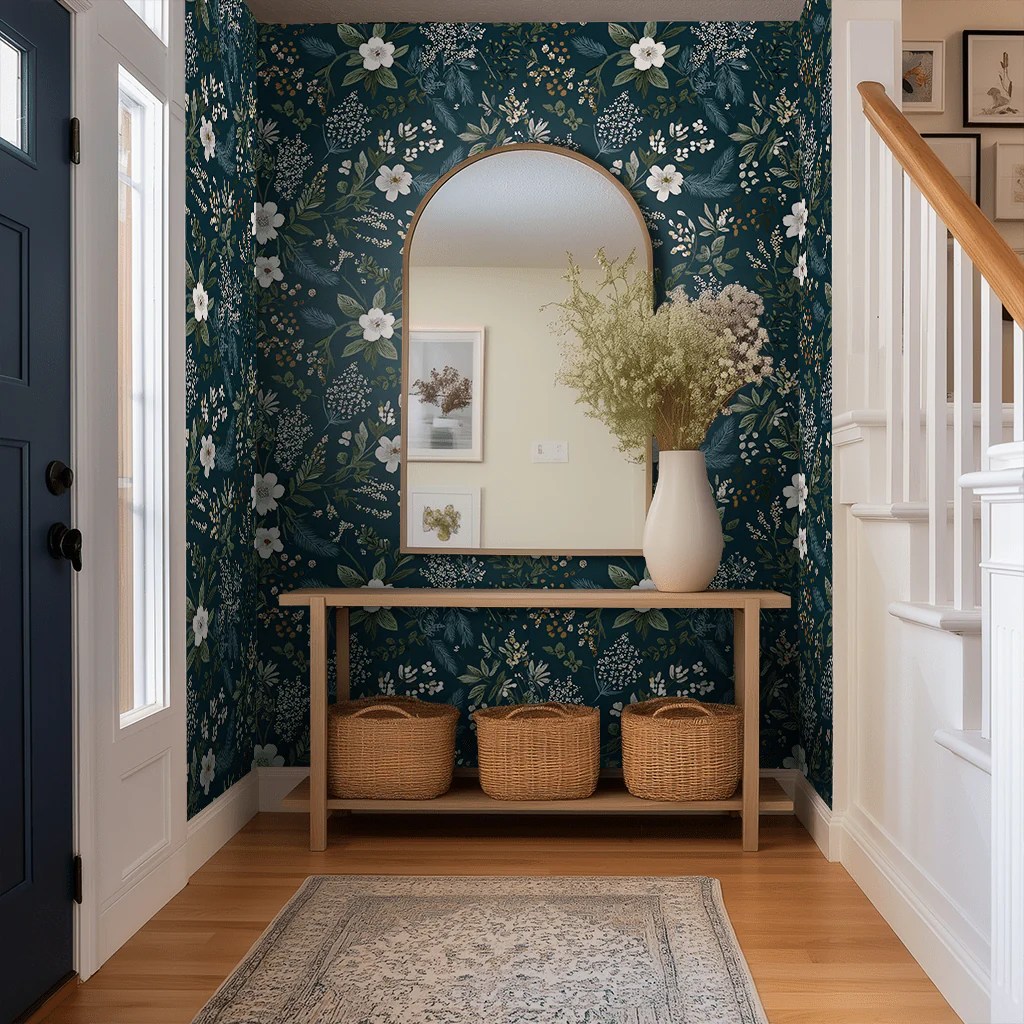
Painted Paper’s June Blossom — creamy white florals and wispy greenery on a lush teal ground — is one of the most effective options for this application. The illustrated quality gives it the handcrafted feel the aesthetic requires, and the teal background creates depth and richness while the cream florals keep it from reading as heavy or stark.
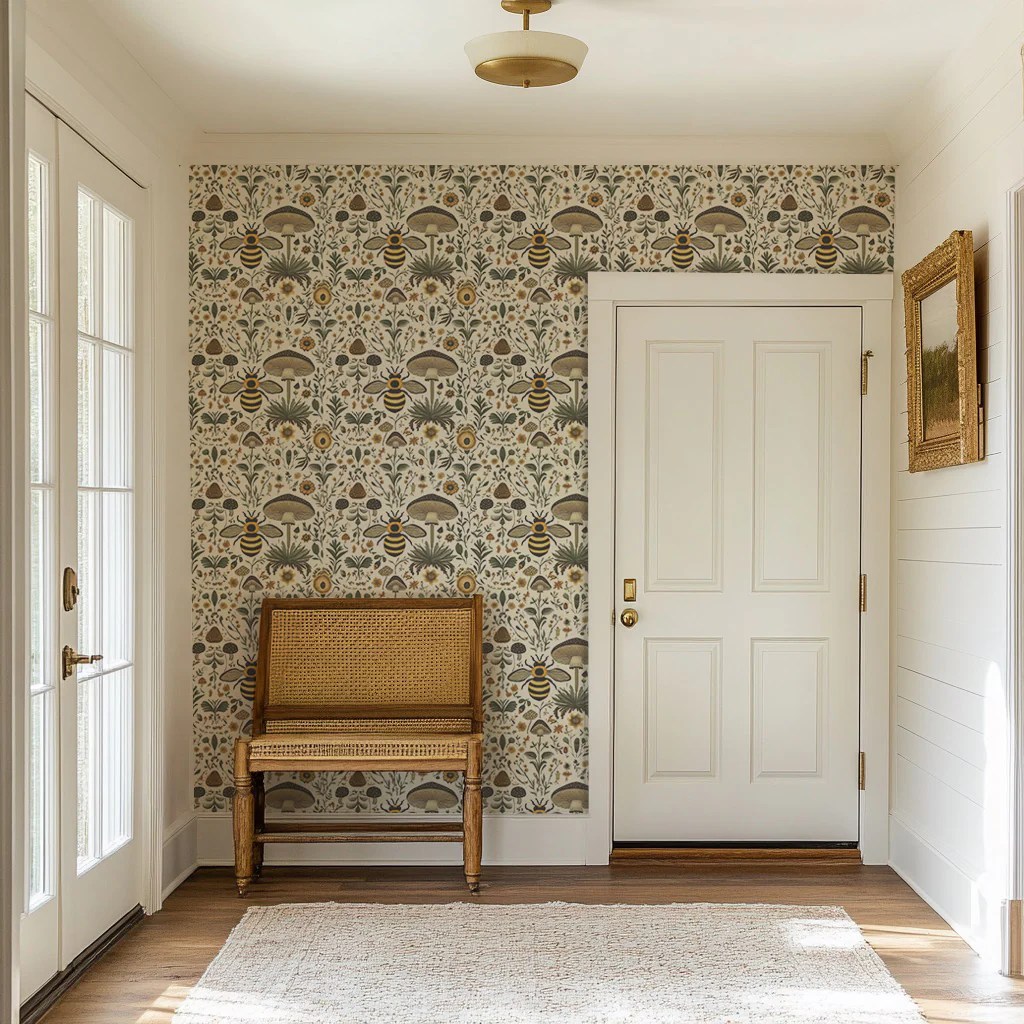
For a lighter take: Painted Paper’s Oleander — detailed illustrations of bees, mushrooms, and wildflowers in warm earthy tones on a cream ground — creates the grandmillennial quality without the drama of a dark ground. The pattern has genuine complexity and rewards close inspection, but the warm cream background keeps it airy rather than heavy — better for smaller rooms, rooms with limited natural light, or bedrooms where you want character without enclosure.
The Bedding Layer
Grandmillennial bedding is layered and tactile. The combination that works: a neutral linen duvet as the base (this is the room’s breathing space), embroidered or floral pillowcases, at least one large floral or tapestry-style cushion, and a quilt or patterned throw folded at the foot.
The floral elements in the bedding should share at least one color with the wallpaper. They don’t need to match — the connection can be a single recurring tone, like warm amber in the wallpaper and warm ivory in the embroidered pillowcase.
Avoid: bedding sets purchased together. The grandmillennial aesthetic lives or dies by the sense that things were found at different times from different places.
The Furniture Mix
The furniture in a grandmillennial bedroom should look like it was assembled over time from different sources and different eras. A cane headboard or a simple wood frame sits better than a tufted upholstered piece. A vintage dresser with a slightly mismatched mirror. Nightstands that don’t match each other but share a similar warmth.
Cane and rattan furniture is particularly strong in this aesthetic — it references the exact design era the grandmillennial look draws from (1960s–70s) while being light enough not to visually overwhelm a room already rich with pattern.
The Object Layer
This is where the grandmillennial bedroom earns its distinctiveness. The objects on the dresser, the bedside table, the windowsill: a ceramic lamp with an interesting base (estate sales are the best source), a small framed botanical print, a tray with perfume bottles, a small vase with dried flowers or a single stem.
Each object should be able to answer the question: where did this come from? Objects with no answer to that question — purchased generically, chosen for approximate fit — undermine the aesthetic. The grandmillennial bedroom is legible as belonging to a specific person. Generic objects work against that.
Lighting
Warm, layered, and slightly theatrical. Bedside lamps with ceramic bases and fabric shades (drum shades in a neutral linen or a small pleated shade) work better than contemporary metal fixtures. A chandelier or pendant with visual interest over the bed or in the center of the room. No LED strip lighting, no spotlights, nothing that reads as modern and functional.
The goal is lamplight that makes the patterns on the walls and the textures in the bedding glow. Grandmillennial bedrooms are at their best at night, which is when most bedrooms are used. Design for that light.
The Edit That Prevents Costume
The grandmillennial aesthetic goes wrong when it becomes literal — every surface covered, no hierarchy, no breathing room. The rooms that work in this aesthetic have edited as carefully as they’ve added.
The discipline: remove anything that doesn’t have genuine warmth, history, or character. Remove the decorative objects that are present because they filled a gap. Remove the extra cushions that are providing bulk without personality. What’s left should be a room that’s full but not crowded, warm but not cloying, patterned but not overwhelming.
The test: if you removed the person who lives there, would you still be able to tell something about them from the room? In a grandmillennial bedroom done well, the answer is yes.
 Pattrn
Leave a comment